Un hocico un poco más corto, mucho significado
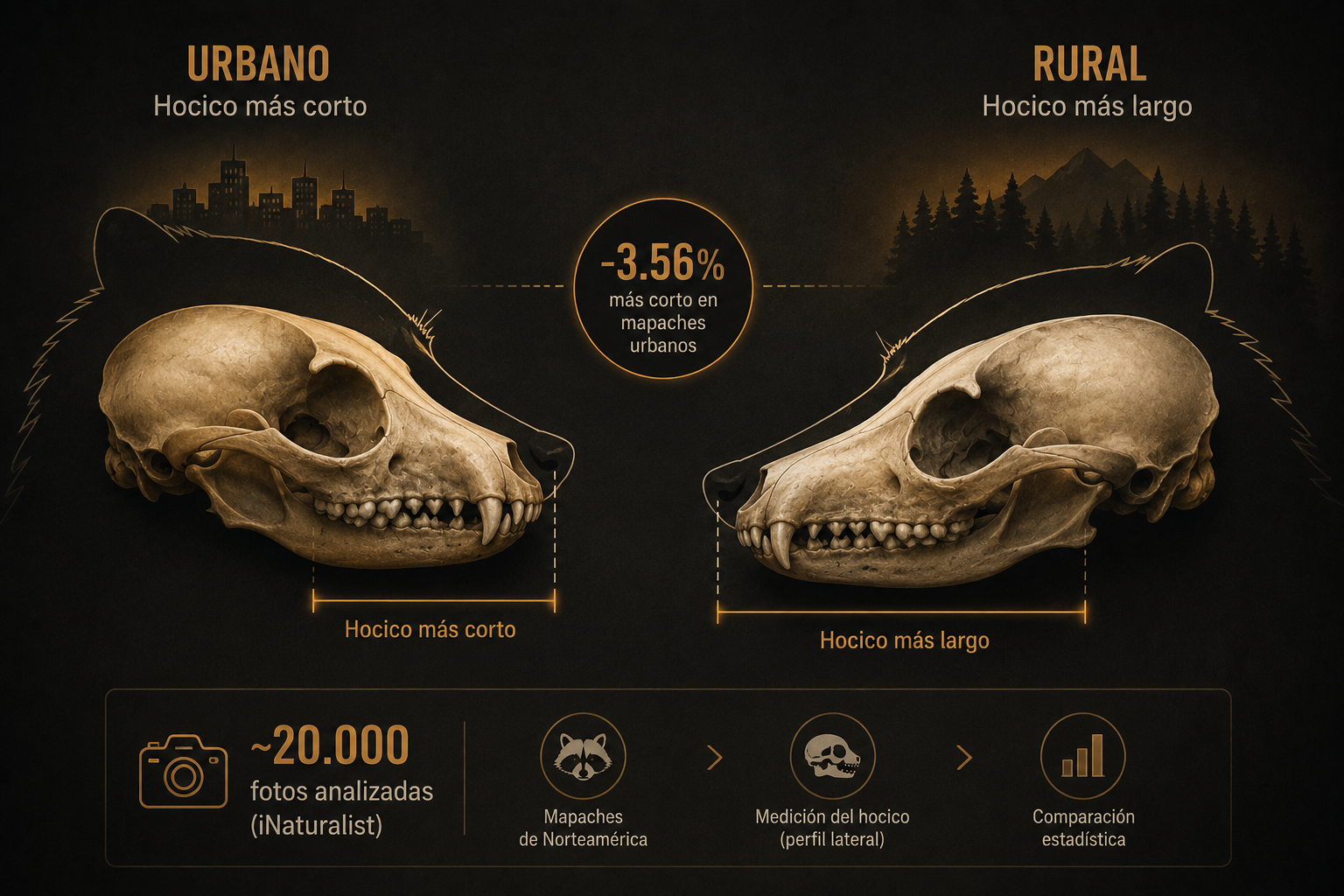
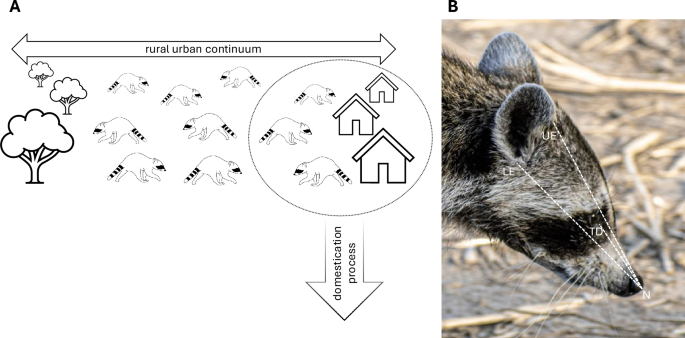
Un estudio publicado en Frontiers in Zoology, con dieciséis estudiantes de la Universidad de Arkansas en Little Rock como coautores, midió algo aparentemente simple: la proporción entre el largo del hocico y el largo del cráneo en mapaches, comparando poblaciones urbanas y rurales de Estados Unidos. Para hacerlo a esa escala, el equipo recurrió a casi 20.000 imágenes subidas por usuarios comunes a la plataforma de ciencia ciudadana iNaturalist.
El resultado: los mapaches urbanos tienen el hocico, en promedio, un 3,56% más corto que sus contrapartes rurales. La diferencia se mantuvo incluso después de controlar por zona climática, descartando que fuera simplemente un efecto del clima más cálido en ciertas ciudades.
Por qué un hocico más corto importa
Un cambio de poco más del 3% en una medida corporal puede sonar insignificante, pero en biología evolutiva ese tipo de rasgo tiene un nombre y una teoría detrás: el síndrome de domesticación por cresta neural (NCDS, por sus siglas en inglés). Es un conjunto de cambios físicos —hocicos más cortos, orejas más flexibles, cambios en el color del pelaje, dientes más pequeños— que tienden a aparecer juntos en animales que se vuelven más dóciles y tolerantes hacia los humanos, incluso sin que nadie los esté criando o seleccionando de forma deliberada.
Es el mismo patrón que se documenta en perros comparados con lobos, o en el experimento clásico de zorros domesticados en Rusia a mediados del siglo XX. La diferencia es que ahí hubo selección humana directa —criar deliberadamente a los animales más mansos—; en los mapaches urbanos, nadie los está criando. El proceso parece estar ocurriendo solo.
Cómo empieza una domesticación sin que nadie la planee
La explicación más aceptada es que la vida urbana selecciona, sin querer, a los mapaches más audaces y menos temerosos: los que se acercan al tacho de basura sin salir corriendo son los que consiguen comer, sobreviven mejor y dejan más crías. Con el tiempo, esa presión selectiva por audacia parece arrastrar consigo, como efecto secundario genético, cambios físicos que no tienen nada que ver directamente con el comportamiento —como la forma del cráneo.
Es domesticación en el sentido biológico del término, no en el sentido de "convertirse en mascota". Nadie está criando mapaches para venderlos como animales de compañía, y expertos citados en la cobertura del hallazgo son claros al respecto: esto no significa que los mapaches se estén volviendo mascotas en la práctica, sino que algunos están adaptándose de forma notable a vivir rodeados de humanos.
Lo que todavía falta confirmar
El propio equipo de investigación plantea el siguiente paso: validar estas mediciones basadas en fotos con escaneos 3D de cráneos reales de su colección universitaria, para descartar que el efecto sea un artefacto de cómo se toman las fotos en distintos ángulos. También quieren extender el mismo método a otros mamíferos que conviven con humanos en las ciudades, como armadillos y zarigüeyas, para ver si el mismo patrón evolutivo aparece en especies con biología muy distinta.
Si se confirma en más especies, la implicación es amplia: la domesticación no requeriría, como se pensaba tradicionalmente, que los humanos capturen y críen animales de forma activa. Bastaría con que una especie decida, generación tras generación, que vivir cerca de nosotros vale la pena.