La materia que existió antes de que hubiera átomos
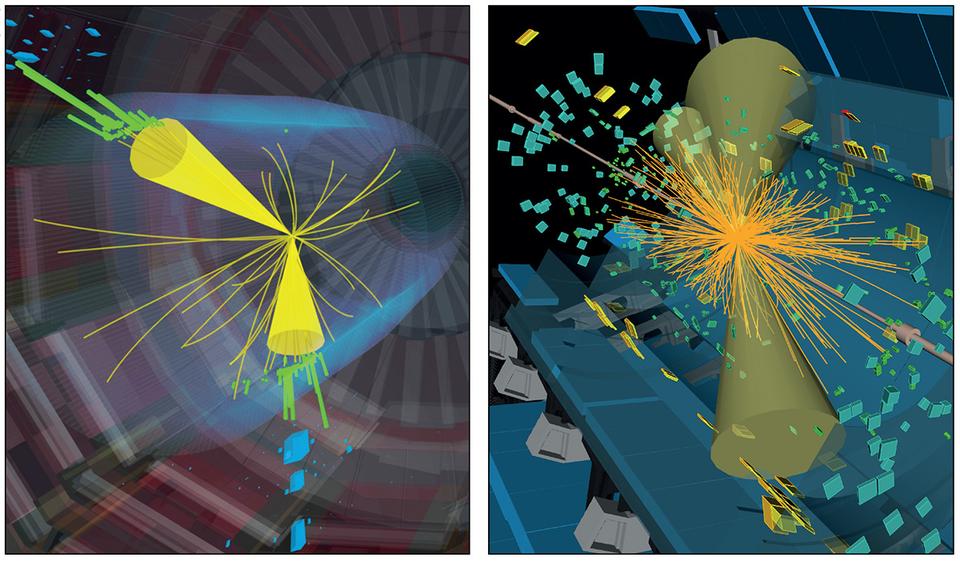
En el primer microsegundo después del Big Bang, el universo estaba demasiado caliente para que existieran protones y neutrones tal como los conocemos. En su lugar, sus componentes internos —quarks y gluones— flotaban libres en una especie de sopa hirviendo: el plasma de quarks-gluones. Recrear esa sopa en el laboratorio, aunque sea durante fracciones de segundo, es una de las formas que tienen los físicos de estudiar de cerca ese instante fundacional.
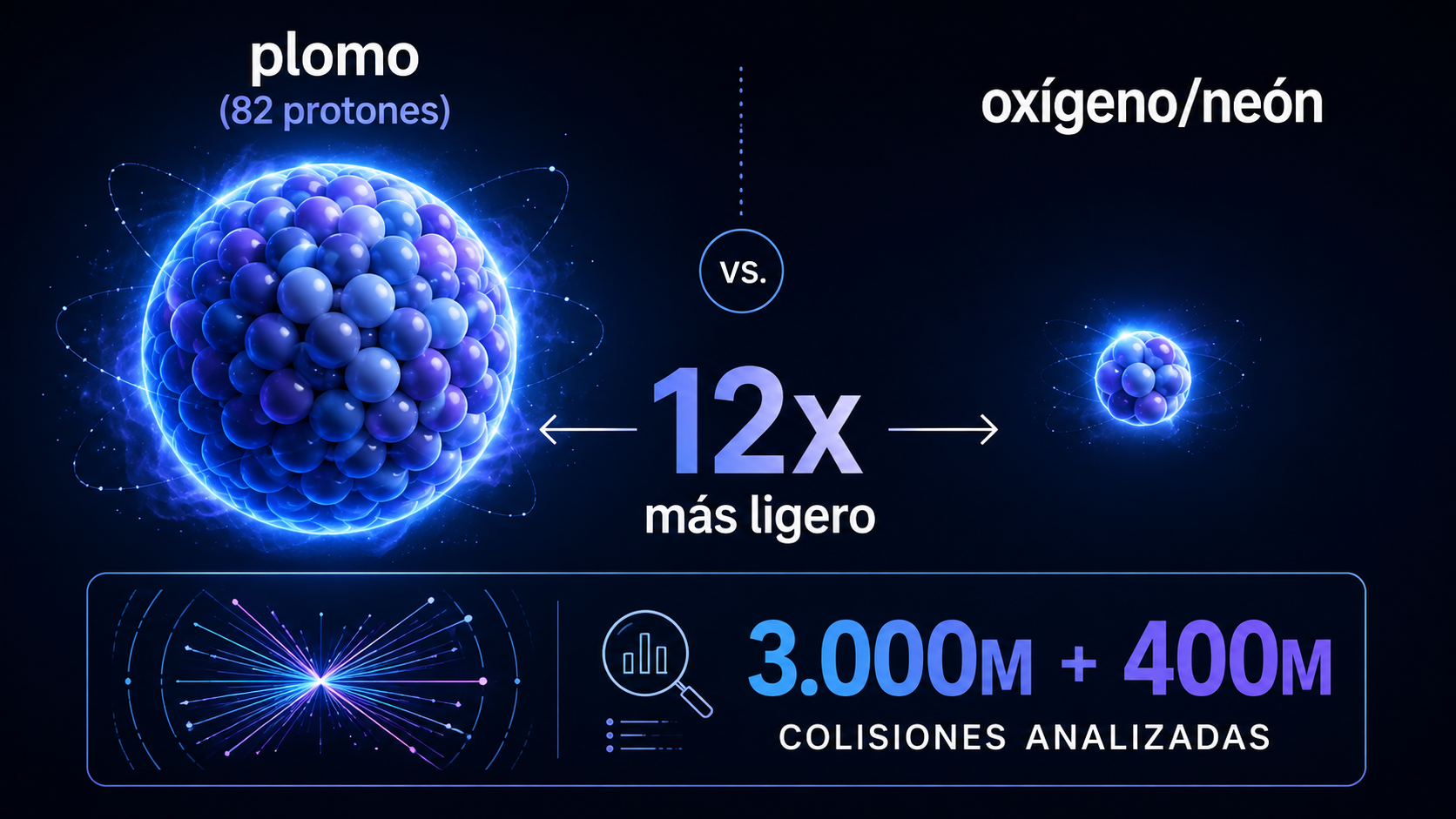
Hasta ahora, la receta parecía requerir ingredientes pesados. Los experimentos que lograron formar plasma de quarks-gluones en el Gran Colisionador de Hadrones (LHC) del CERN usaban típicamente núcleos de plomo, con 82 protones cada uno.
Colisionar algo doce veces más ligero
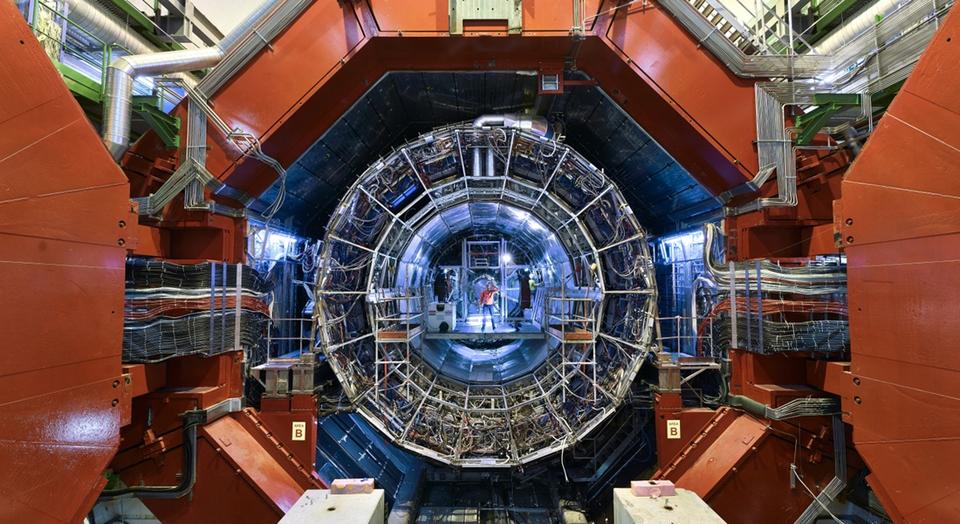
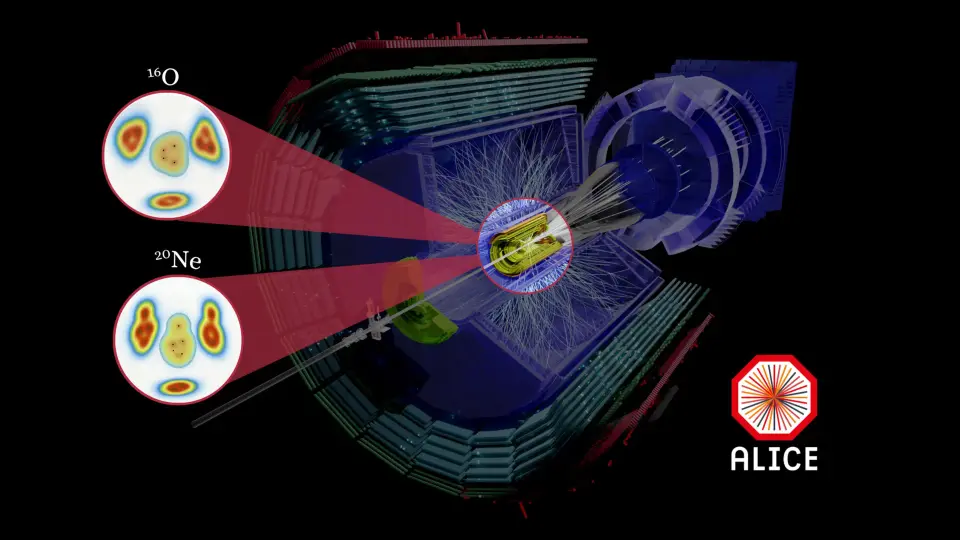
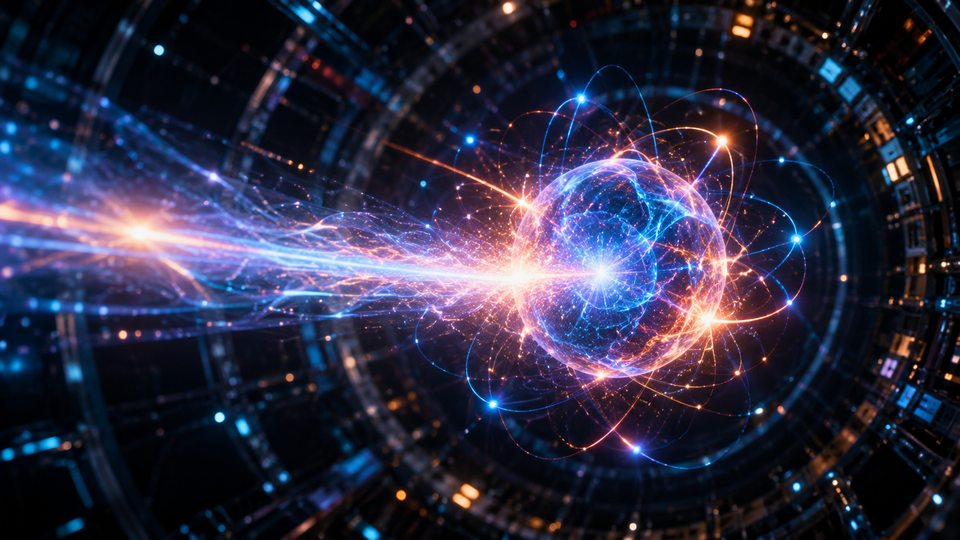
Un equipo liderado por el Instituto Niels Bohr de la Universidad de Copenhague, dentro de la colaboración internacional ALICE, decidió probar con núcleos mucho más livianos: oxígeno-16 y neón-20. Analizaron cerca de 3.000 millones de colisiones oxígeno-oxígeno y 400 millones neón-neón registradas por el detector ALICE en julio de 2025.
El resultado: el comportamiento colectivo de las partículas resultantes fue compatible con la formación de plasma de quarks-gluones, incluso con núcleos doce veces más ligeros que el plomo. Es la primera vez que se documenta con esta claridad que el fenómeno no depende de la masa nuclear tanto como se pensaba.
Una pista extra: la forma de los núcleos
El experimento entregó algo más que la confirmación del plasma. El patrón con que se dispersan las partículas tras la colisión también revela la forma geométrica del núcleo que chocó. Las colisiones de oxígeno produjeron un patrón más redondeado, mientras que las de neón mostraron una forma alargada, descrita por el equipo como de "bolo de boliche" —consistente con lo que la teoría predecía sobre la estructura del neón-20, pero nunca antes confirmado de esta manera experimental.
Es una especie de dos-por-uno: la misma colisión sirve para estudiar la física del universo temprano y, al mismo tiempo, la estructura interna del núcleo atómico que se usó como proyectil.
Por qué importa usar núcleos más pequeños
Usar núcleos más livianos no es solo una curiosidad técnica. Si el plasma de quarks-gluones puede formarse con sistemas cada vez más pequeños, eso ayuda a los físicos a determinar dónde está el límite real: cuál es el tamaño mínimo de colisión que todavía produce ese estado de la materia, y dónde empieza a comportarse como una simple colisión de partículas individuales sin efectos colectivos.
Esa frontera importa porque los modelos que describen el universo un microsegundo después del Big Bang dependen de entender bien la transición entre "materia ordinaria" y "plasma primordial" —y esa transición se estudia mejor cuanto más variado es el rango de tamaños de colisión disponible para comparar.
Lo que sigue
El hallazgo, publicado en Physical Review Letters, no cierra el tema: los investigadores plantean seguir bajando en tamaño para encontrar el punto exacto donde el efecto colectivo deja de observarse, y comparar sistemáticamente más combinaciones de núcleos ligeros para separar el efecto de la masa del efecto de la forma geométrica. Tampoco está resuelto si los modelos actuales de hidrodinámica relativista —diseñados originalmente para colisiones de núcleos pesados— necesitan ajustes para describir con precisión estos sistemas más pequeños.