El material más duro conocido, llevado más allá de su límite
El diamante es la referencia estándar de dureza extrema, pero incluso él tiene un punto de quiebre bajo presión suficiente. Dentro de Neptuno y Urano, los llamados gigantes de hielo del sistema solar, la presión es tan alta que los átomos de carbono disueltos en las capas profundas del planeta se comprimen directamente en diamante, que luego cae como lluvia sólida hacia el núcleo. El fenómeno —bautizado "lluvia de diamantes"— se había recreado antes en laboratorio, pero medir con precisión qué le pasa al diamante en esas condiciones seguía siendo un problema abierto.
Comprimir más rápido de lo que se puede fotografiar
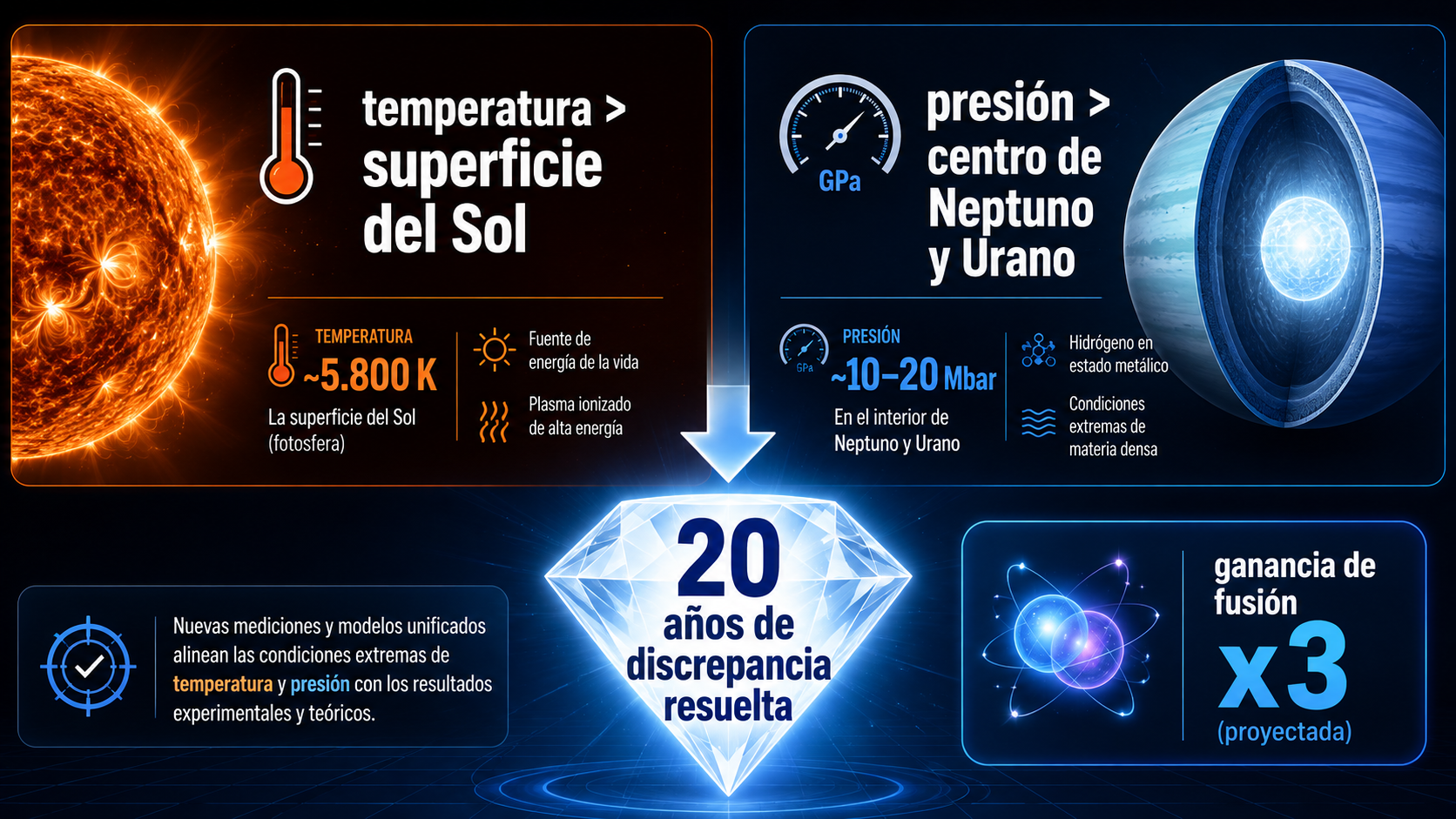
Un equipo del Lawrence Livermore National Laboratory sometió muestras diminutas de diamante a compresión por choque —esencialmente, un impacto controlado que comprime el material en fracciones de segundo— hasta alcanzar temperaturas más calientes que la superficie del Sol y presiones superiores a las que existen en el centro de Neptuno y Urano. En ese mismo instante extremo, lograron medir simultáneamente cuatro variables: estructura atómica, temperatura, densidad y reflectividad óptica del material.
Esa simultaneidad es la parte técnicamente difícil: en experimentos anteriores, algunas de esas mediciones se hacían por separado o se inferían de forma indirecta, dejando margen para que la teoría y el dato experimental no coincidieran exactamente.
Dos discrepancias de 20 años, resueltas de una vez
Con las cuatro mediciones tomadas al mismo tiempo, el equipo logró hacer coincidir finalmente los resultados experimentales con las simulaciones basadas en mecánica cuántica —cerrando dos discrepancias que el campo arrastraba desde hacía dos décadas entre lo que la teoría predecía sobre las fases del carbono a alta presión y lo que se medía en el laboratorio.
No es un ajuste menor: significa que los modelos que se usan para predecir cómo se comporta la materia en condiciones extremas —dentro de planetas, o en experimentos de fusión— ahora tienen un punto de calibración confiable donde antes había una zona de incertidumbre.
De los interiores planetarios a la energía de fusión
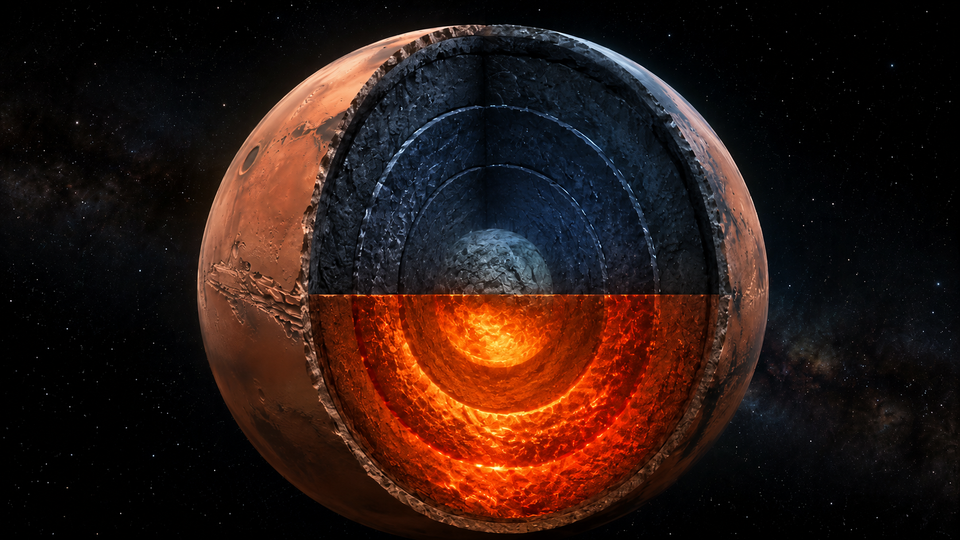
Las implicaciones prácticas van en dos direcciones. La primera es planetaria: entender mejor cómo se comporta el diamante bajo esa presión permite refinar los modelos del interior de Neptuno y Urano, sobre los que hay relativamente poca información directa —solo la sonda Voyager 2 los sobrevoló, en 1986.
La segunda es energética. Aplicar estos hallazgos a la fusión por confinamiento inercial —la técnica que intenta generar energía comprimiendo combustible con lásers de alta potencia— podría, según el equipo, triplicar la ganancia energética del proceso. El diamante se usa como parte de la cápsula que contiene el combustible en ese tipo de experimentos, así que entender exactamente cómo se comporta bajo presión extrema no es un dato de curiosidad astronómica, sino un insumo directo para el diseño de esos experimentos.
Lo que sigue
El resultado resuelve una discrepancia de medición, no agota el tema: los investigadores todavía trabajan en extender estas mediciones a presiones aún mayores, más cercanas a las que existen en planetas gigantes gaseosos como Júpiter, y en verificar si el mismo método simultáneo de cuatro variables funciona igual de bien con otros materiales relevantes para la fusión. Tampoco está probado todavía que la mejora teórica en ganancia energética se traduzca, en la práctica, en una fusión con ganancia neta sostenida fuera del laboratorio.